Built to fit your business.
We find the manual work slowing your team down, then build a better way to get it done.
Has your business outgrown its tools?
These are the signs we hear most often from growing teams of 5 to 100 people.
Too many teams adapt their work to the limits of their software.
Fitment fits the technology to the business.
Four ways to fit the solution
Improve the tools you have
Configure and extend the software you already pay for, so it does the job it was bought to do.
For exampleJob templates in your field service app that fill themselves from the quote.
Connect your systems
Move information between systems automatically, so it is entered once and trusted everywhere.
For exampleOrders received by email arrive in your ERP without retyping.
Automate a process
Hand repetitive steps to software and practical AI, with a person checking where judgement matters.
For exampleSupplier invoices read, matched to purchase orders, and queued for approval.
Build custom software
When nothing on the market fits, build an application around the way your team actually works.
For exampleA scheduling board that knows your crews, certifications, and travel times.
Measure. Fit. Tune.
01
Measure
Understand the business before recommending the solution.
A paid assessment maps how the work happens today, finds the bottlenecks, sets a baseline, and ranks what to fix first.
You receive
A clear assessment, recommended approach, defined scope, and estimated cost. Expected benefits are quantified where the evidence supports it.
02
Fit
Implement the solution that best addresses the problem.
That may mean configuring existing software, connecting systems, introducing AI automation, or building a custom application.
You receive
A working solution with appropriate testing, documentation, and a clear handover.
03
Tune
Keep the solution dependable as the business evolves.
Ongoing support covers maintenance, monitoring, help when something needs attention, and planned improvements.
You receive
A service agreement covering responsibilities, response expectations, included work, and how further development is quoted.
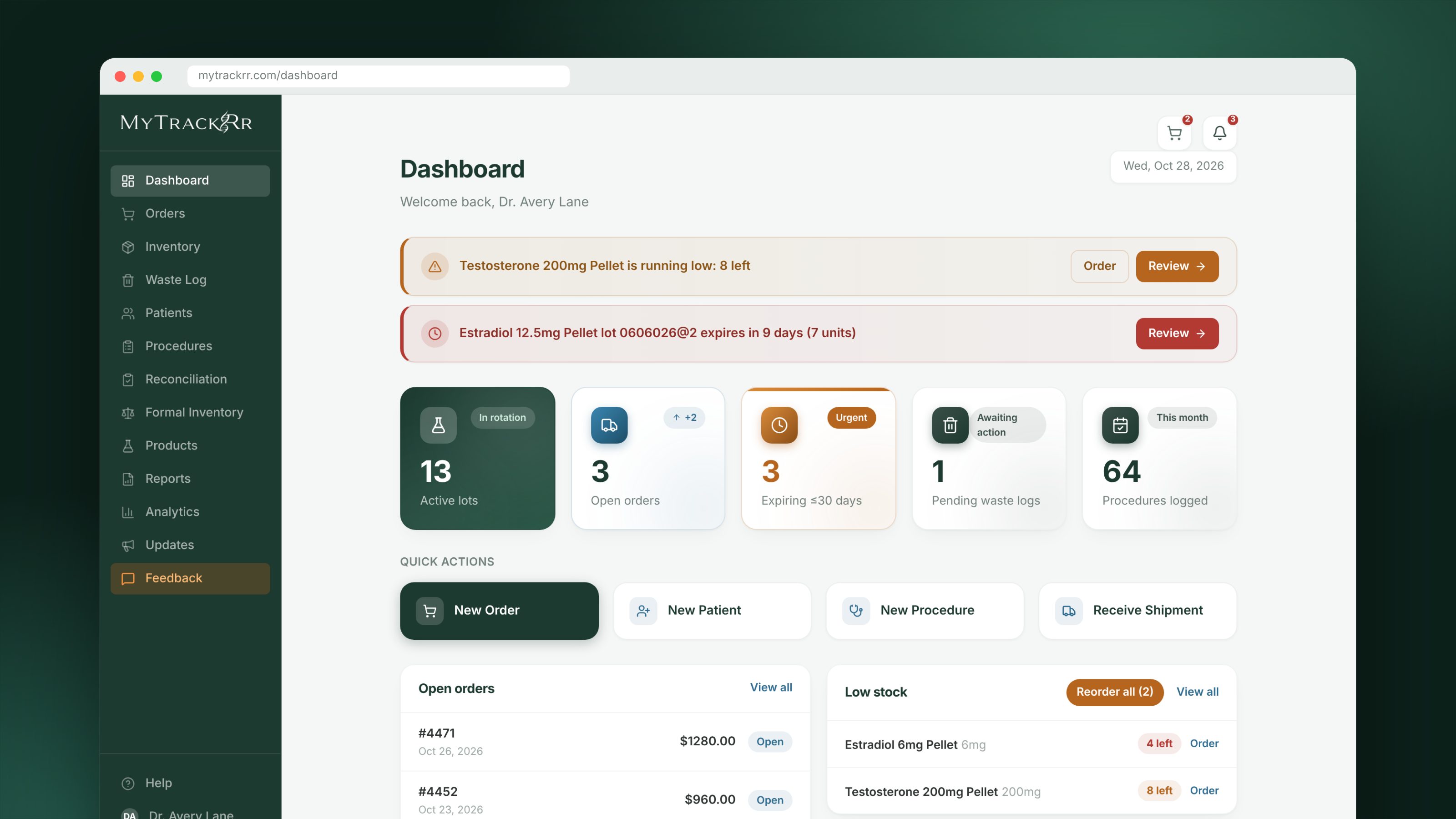
Founder project
MyTrackRR
MyTrackRR helps hormone pellet clinics stay on top of DEA compliance. It tracks every controlled pellet from the pharmacy order to the patient, so the records are complete and ready when an audit comes.
- Industry
- Healthcare: hormone replacement therapy clinics
- Solution
- Custom software
What you can expect from us
- Fit before features
- Recommendations follow the business need, at a sensible level of complexity. Sometimes the answer is a setting, not a system.
- An operations perspective
- Workflow, adoption, and day-to-day reliability shape every build, because software only helps if people use it.
- Practical AI
- AI is applied to specific tasks where it improves the work, with oversight and a clear view of its limits.
- Plain English
- You will understand what is being built, what it costs, and how it will help, before any work begins.
- Results you can check
- Success is tied to agreed measures: time saved, fewer errors, faster turnaround, or more capacity.
For growing businesses whose operations have outgrown their tools
- Team size
- 5 to 100 people
- Work
- Operations-heavy, with real complexity
- In-house tech
- Limited or stretched
- Industries
- Healthcare, distribution, logistics, trades, and service businesses
Make room for more.
Start with an assessment. You get a clear map of the work, a recommended approach, a defined scope, and a cost.
Book an assessment